FAQs
General Project Information
- Excavating contaminated soil
- Transporting it to a licensed facility for treatment
- Backfilling with clean soil
- Reinstating surfaces
- SA EPA (regulatory oversight)
- Independent EPA-accredited site auditor (GHD)
- AECOM (consulting & remediation management)
- TSA Riley (community engagement support)
What is the Port Adelaide Former Gasworks Remediation Project?
This project is being delivered by Australian Gas Networks (AGN) to address legacy contamination from a former gasworks site. The aim is to remove impacted soil and ensure the site meets current environmental standards
Where is the site located?
The former gasworks is located in Rosewater, bordered by Alice, Henry and Rosetta Streets, Rosewater
What is currently on the site?
The site includes a strata-titled unit complex and five individual residential properties.
What works are involved?
The process includes:
What is happening at the site now?
EPA approvals have been received for stage one works. AGN is preparing for on-site works. Once complete, lessons learned from stage one will be implemented, and documentation will be prepared and submitted for other stages will follow.
What will happen with the site once remediation is complete?
Properties will be reinstated and subject to an Environmental Audit to confirm that the properties continue to be safe residential use. EPA-endorsed Site Management Plans will be registered on property titles as part of compliance.
When are remediation works anticipated to commence?
Works at stage 1 are expected to begin in July 2026
What are the work hours?
Standard hours: Monday to Friday, 7am-6pm.
Occasional weekend work may occur when required
How long will works take?
Stage 1 is expected to take 3–4 weeks. Later stages are expected to be longer due to the area of land being remediated. We will communicate timeframes once more information becomes available.
What studies were undertaken?
Environmental site assessments included soil, groundwater, and vapour sampling under an EPA-endorsed Voluntary Site Contamination Assessment Plan (VSCAP).
Who else is involved?
Remediation
- PAHs (polycyclic aromatic hydrocarbons)
- BTEX compounds (benzene, toluene, etc.)
- Heavy metals
- Coal tar
- Excavation of contaminated soil
- Odour and dust control
- Transport of waste to licensed facilities
- Site reinstatement and validation
How did the site get contaminated?
From 1866–1922 the site was used as a gasworks facility where coal was converted into gas. Operations like these often leave behind by-products such as coal tar and ash which can be left in the soil long after the site ceases to operate.
What contaminants are present?
Is there any impact to groundwater?
Groundwater has been assessed, and risks have been determined to be low.
Why is the site being remediated?
The former gasworks operations left behind contaminated soil. Remediation is
being undertaken to meet current environmental regulations and ensure the land remains safe for residential use.
What will remediation involve?
Where will the contaminated material go?
It will be sent to EPA-licensed disposal or treatment facilities, depending on the contaminant type and classification.
Will there be dust or odour during works?
During excavation you may notice temporary dust or odour. This is expected for this type of work. Dust and odour will be continuously monitored and managed to minimise impacts.
How will dust and odour be managed?
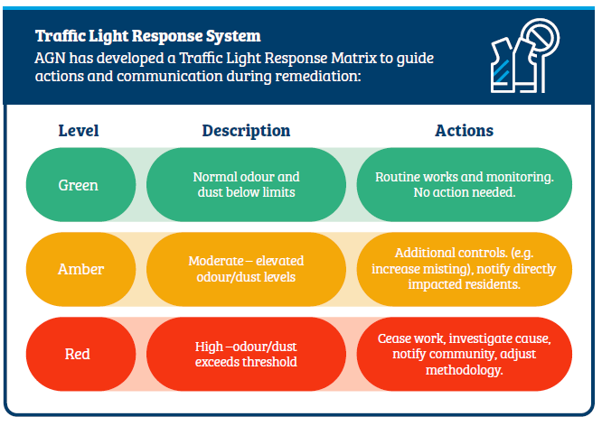
We use continuous air quality monitoring, water misters, odour-neutralising chemicals, and covered truck loads. Work may pause if thresholds are exceeded to protect community wellbeing.
Health & Safety
- Dust suppression (such as water misting)
- Odour management during excavation
- Continuous air quality monitoring
- Secure fencing and safety signage
How are you ensuring public safety during the project?
The works will be carefully managed to minimise impacts on residents and the surrounding community. Measures include:
The works are carried out in accordance with a Site Management Plan and are overseen by the EPA and an EPA-accredited Site Contamination Auditor.
Is the material on site safe to nearby residents?
Health risks are considered low under current use. However, to ensure future safety, remediation is required. Air and dust will be closely monitored during works.
I live nearby – will this affect me?
You may see/hear/smell activity such as truck movements, excavation machinery, and occasional odour. We will notify you of high-impact workdays.
What if there’s an emergency?
Contractors follow strict environmental incident protocols. The site auditor and EPA will also be informed if an incident occurs. We are committed to keeping the community informed and will follow strict emergency procedures. You will be notified in the event of an emergency which may impact you or your property.
Environmental Monitoring
How will Air Quality and Odour be Monitoring During Works
Air quality monitoring will be conducted at the site boundary and
within the community using:
• Real-time dust and vapour monitoring at fixed locations.
• Odour and vapour monitoring by qualified personnel during high-risk activities.
• Visual inspections and community feedback.
Monitoring results will be reviewed regularly, and any exceedances will trigger an immediate investigation and response.
How Air Quality and Odour Will Be Controlled
Remediation will occur in small, carefully managed stages to reduce disruption and prevent off-site impacts.
Key controls include:
• Dust and odour suppression using water misting sprays on active work areas and stockpiles.
• Covering of stockpiles and loads to prevent dust and odour escape during transport.
• Minimising open excavation by covering or backfilling disturbed areas promptly.
• Work stoppage protocols if odour or dust exceeds trigger levels.
I smell something – what should I do?
Occasional unpleasant odours during the works are expected. We will be monitoring air-quality closely but if you’re concerned, please contact the project team to discuss further.
What the Community May Notice
Residents may experience:
• Occasional odour, particularly during excavation of deeper fill layers.
• Increased construction activity including trucks and excavation equipment.
• Light noise during standard working hours.
• Water misting used for dust and odour suppression.
• Site signage and traffic controls.
Community Engagement
- SMS or email updates
- Door-knocks
- Letterbox notifications
- Factsheets and newsletters
- A project website
- community.engagement@agig.com.au
- Katherine Simmons (AGN): 0430 713 356
- Andrea Murphy (TSA Riley): 0432 254 094
How will the community be kept informed?
Will I need to leave my home?
Temporary relocation may be required for some properties where remediation works are taking place.
If relocation is necessary, the affected property owners and residents will be contacted directly to discuss arrangements. If you have not been contacted about relocation, your property is not currently identified as requiring this measure.
What if I have concerns or complaints?
Please contact us directly:
How are you addressing community concerns?
A Communications and Engagement Plan has been developed. It includes pre-remediation communication, real-time updates, and a complaints handling protocol.